Photobiomodulation as a Conservative Adjunct in Adolescent Idiopathic Scoliosis: A Three-Year Case Report
Michael J. Bartell1, D.C.; Sherrie Myers Bartell2, Ph.D.
1Corresponding Author: Michael J. Bartell, D.C.
Private Practice, Mechanicsburg, PA, USA
Email: mjbartelldc@gmail.com
ORCID: https://orcid.org/0009-0003-0314-1423
2Sherrie Myers Bartell, Ph.D.
Adjunct Faculty, MBA Program, University of the People, Pasadena, CA, USA
Email: sherrie.bartell@uopeople.edu
ORCID: https://orcid.org/0009-0007-6319-8973
ABSTRACT
Adolescent idiopathic scoliosis (AIS) presents challenges for conservative management, particularly in adolescents with large curves at diagnosis. This case report describes the three-year course of care for a 15-year-old female with severe AIS who received photobiomodulation therapy (PBM), integrated within routine chiropractic care that included spinal adjustments and exercise-based musculoskeletal support, as part of a non-bracing conservative management plan. Treatment included musculoskeletal and cranial PBM delivered with a 635 nm device using pulsed frequencies selected to support postural control and neuromuscular function. Radiographs obtained at six-month intervals demonstrated progressive reductions in Cobb angles, with thoracic curvature decreasing from 65° to 24° and lumbar curvature from 36° to 11°. Improvements were also observed in posture, pain, range of motion, and functional mobility, with no adverse effects reported. This case highlights the potential role of PBM as an adjunctive modality within conservative AIS management and supports further investigation into its clinical applications.
Key Words: Adolescent idiopathic scoliosis; photobiomodulation; low-level laser therapy; conservative management; chiropractic; case report
Introduction
Adolescent idiopathic scoliosis (AIS) affects approximately 2–3% of adolescents and is characterized by a lateral spinal curvature of unknown origin.1 Conventional management strategies include observation, bracing, and surgical correction, each with limitations related to progression risk, patient tolerance, or long-term outcomes. These constraints have contributed to growing interest in non-invasive adjunctive approaches that may support musculoskeletal function and postural regulation.
Photobiomodulation therapy (PBM), also referred to as low-level laser therapy, has been explored in musculoskeletal rehabilitation for its potential effects on cellular metabolism, tissue recovery, and neuromuscular coordination.2-5 Early reports combining PBM with postural rehabilitation techniques in AIS populations have described favorable changes in curvature magnitude and trunk symmetry, although published protocols vary widely.6,7
Given the need for additional documentation of conservative, non-invasive strategies for AIS, this case report describes the clinical presentation, intervention, and outcomes of a three-year course of musculoskeletal and cranial PBM in an adolescent with severe AIS.
PBM was selected as an adjunctive modality based on its emerging evidence base in musculoskeletal rehabilitation, including reported effects on cellular metabolism, neuromuscular coordination, and postural control.2,8,9 Given the patient’s preference for a non-bracing approach and the family’s interest in conservative options, PBM was incorporated to support musculoskeletal function and postural regulation while avoiding the psychosocial and tolerance challenges associated with bracing. Figure 1 illustrates the interdisciplinary domains—photobiology, systems biology, energy medicine, and neurochemical modulation—that informed the PBM strategy applied in this case.
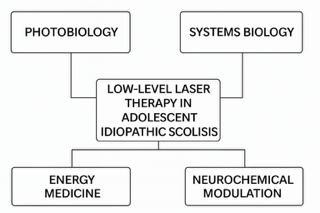
Figure 1. The interdisciplinary domains—photobiology, systems biology, energy medicine, and neurochemical modulation—that informed the PBM strategy.
Case Presentation
A 15-year-old female was referred for evaluation following a school scoliosis screening that identified visible trunk asymmetry. Standing posteroanterior radiographs confirmed a right-convex thoracic curve from T3 to T10 measuring 65° at the apex of T7–T8, and a left-convex lumbar curve from L1 to L4 measuring 36° at the apex of L2. Scoliosis severity was classified according to widely used radiographic thresholds, with curves greater than 40–45° considered severe due to their high likelihood of progression and reduced responsiveness to bracing; the patient’s 65° thoracic curve and 36° lumbar curve therefore met criteria for severe AIS at presentation. Table 1 summarizes commonly used radiographic thresholds for AIS severity classification.

Table 1. AIS Severity Classification.
Axial rotation was most pronounced at the thoracic apex, corresponding to a right-sided rib prominence on the Adams Forward Bend Test. Sagittal views demonstrated preserved lumbar lordosis and mild thoracic hypokyphosis.
The patient reported intermittent discomfort during prolonged standing and occasional fatigue with physical activity. She denied radiating pain, numbness, weakness, or changes in bowel or bladder function. There was no history of trauma, congenital spinal deformity, or prior treatment for scoliosis. Neurological examination revealed normal reflexes, strength, and sensation in all extremities.
The patient was otherwise healthy, active in school sports, and reported no limitations in daily activities. Her family sought a conservative, non-bracing approach due to concerns about bracing tolerance and psychosocial impact. Clinical evaluations were performed every three months, and radiographs were obtained at six-month intervals to monitor curvature progression and treatment response over the three-year period.
Intervention
The patient received photobiomodulation therapy (PBM) over a three-year period from 2015 to 2017. Treatment began with twice weekly sessions for the first six months, followed by weekly maintenance sessions. A Class II therapeutic laser operating at 635 nm was used with pulsed frequency modulation ranging from 1 to 750 Hz. Treatment was directed to musculoskeletal and cranial regions selected for their relevance to postural control, neuromuscular coordination, and symptom management.
Spinal manipulation
Spinal adjustments were provided at each visit based on segmental findings and patient presentation. These included high-velocity, low-amplitude manipulations directed to regions of joint restriction identified during examination. Spinal manipulation was integrated as part of the patient’s routine chiropractic care throughout the three-year period and was not delivered at every PBM site or during every PBM application. No adverse effects were reported.
Exercise-based musculoskeletal support
Exercise protocols were incorporated throughout the course of care to support mobility, postural awareness, and muscular balance. These included targeted stretching, core stabilization activities, and functional movement exercises selected based on the patient’s presentation and tolerance. Exercises were adjusted over time in response to clinical findings and were used to complement the goals of PBM and chiropractic care.
Musculoskeletal application
PBM was applied along the thoracic and lumbar curvatures, including the paraspinal musculature, associated nerve roots, and regions of palpable crepitus at the concavity of the curves. Frequencies commonly used in musculoskeletal applications were incorporated, including 5–53 Hz, along with higher frequency settings based on clinical response.6 Dosages ranged from 4 to 6 J/cm² per site. Treatment also included attention to fascial anchor points and postural trigger zones to support mobility and reduce localized discomfort.
Cranial application
Cranial PBM was delivered to the bilateral prefrontal cortex, primary motor cortex, and occipital–parietal junction. Frequencies between 1 and 4 Hz were used, with dosages of 3 to 4 J/cm² per site. These regions were selected to support neuromuscular coordination and postural awareness, based on emerging literature describing potential influences of PBM on cortical activity and sensorimotor integration.7
Throughout the course of care, treatment parameters were adjusted based on clinical presentation, radiographic findings, and patient tolerance. No adverse effects were reported at any point during the intervention period.
Outcomes
Radiographs obtained at six-month intervals demonstrated progressive reductions in curvature over the three-year course of care. The thoracic Cobb angle decreased from 65° at baseline to 24° at the final evaluation, and the lumbar Cobb angle decreased from 36° to 11°. These reductions exceeded the commonly accepted 5° threshold used to distinguish true radiographic change from measurement variability in scoliosis assessment, and surpassed the 10° benchmark often considered indicative of substantial structural change in AIS.
In adolescents with curves of this magnitude, the natural history of AIS typically involves continued progression, particularly for thoracic curves exceeding 50° at or near skeletal maturity. Long-term studies show that untreated curves greater than 40–45° commonly progress at an average rate of 0.5–1.5° per year after growth, with thoracic curves more likely to worsen than lumbar curves. Without intervention, a 65° thoracic curve in a 15-year-old would be expected to remain unstable and continue increasing over time, often leading to reduced pulmonary function, cosmetic concerns, and potential candidacy for surgical correction. Standard conservative management—primarily observation or bracing—has limited effectiveness in curves over 40°, and bracing is generally not recommended once curves exceed 45–50° due to low likelihood of halting progression. Within this context, the sustained reductions observed in this case contrast with the expected natural course of severe AIS.
Clinical evaluations performed every three months documented parallel improvements in posture, mobility, and symptom burden. The patient’s pain score decreased from 4/10 to 1/10, and she demonstrated full, pain-free range of motion by the end of the treatment period. Shoulder and hip symmetry improved, and the rib prominence observed on the Adams Forward Bend Test diminished over time. The patient also reported enhanced postural awareness and improved tolerance for prolonged standing and physical activity.
Functional gains were reflected in increased participation in school and sports activities, with no reported limitations. No adverse effects occurred at any point during treatment, and the patient remained active and symptom stable throughout the three-year period.
Discussion
This case describes an adolescent with severe adolescent idiopathic scoliosis who demonstrated progressive reductions in thoracic and lumbar Cobb angles over a three-year course of photobiomodulation therapy (PBM). Improvements were also observed in posture, pain, and functional mobility. Although these changes occurred during the period of PBM intervention, the observational nature of a single case does not allow conclusions about causation.
PBM has been explored in musculoskeletal rehabilitation for its potential effects on tissue recovery, pain modulation, and neuromuscular function.2-5 Early reports combining laser-based interventions with exercise in AIS populations have described favorable changes in curvature magnitude and trunk symmetry, although published protocols vary widely.6,7 These findings suggest that PBM may have relevance as an adjunctive modality within conservative scoliosis care, particularly when integrated with approaches that support postural control.
PBM has also been associated with improvements in muscle performance and inflammatory markers in other musculoskeletal contexts, which may be relevant to conditions involving asymmetrical loading and muscular imbalance.2 Additional studies have reported PBM-related improvements in tissue recovery and functional outcomes, further supporting its potential role in rehabilitation settings.3,4
In this case, PBM was integrated within a broader conservative care plan that included spinal adjustments and exercise-based musculoskeletal support, consistent with common clinical practice in AIS management. The multimodal nature of the intervention reflects common clinical practice in conservative AIS management, although it limits the ability to isolate the specific contribution of PBM to the observed changes. Cranial PBM was selected based on emerging literature describing potential influences on cortical activity and sensorimotor integration, although these mechanisms remain theoretical and require further investigation.8 The patient’s improvements in posture, pain, and functional mobility paralleled the radiographic changes observed over time, and the absence of adverse effects is consistent with the established safety profile of PBM in pediatric and adult populations.3,4
Bibliometric analyses indicate growing global interest in nonsurgical AIS management and adjunctive therapies, reflecting a broader shift toward conservative, patient-centered approaches.13,14 This case contributes to that developing literature by documenting sustained improvements over an extended period of non-bracing care.
Several practical considerations emerged during treatment. At the time of care, no standardized PBM protocols existed for AIS, particularly regarding cranial application, requiring clinical decision-making based on available literature and patient response. Insurance coverage for PBM was inconsistent, resulting in out-of-pocket costs for the family. Additionally, interpreting radiographic changes in a non-braced adolescent patient presents inherent challenges, as standard benchmarks for progression or regression were developed primarily for bracing and surgical contexts.
Despite these limitations, this case highlights the potential value of PBM as part of a broader conservative management strategy for AIS. Further research, including controlled studies, standardized protocols, and validated functional outcome measures, is needed to clarify the role of PBM in AIS and to determine which patients may benefit most from its use.
Conclusion
This case describes an adolescent with severe adolescent idiopathic scoliosis who demonstrated reductions in thoracic and lumbar Cobb angles, along with improvements in posture, pain, and functional mobility, over a three-year course of photobiomodulation therapy. Although the observational nature of a single case does not allow causal conclusions, the sustained improvements observed during the treatment period highlight the potential value of photobiomodulation as an adjunctive, non-invasive option within conservative scoliosis management. Further research, including controlled studies and standardized protocols, is needed to clarify the role of photobiomodulation in adolescent idiopathic scoliosis and to determine which patients may benefit most from its use.
Patient Consent
Written informed consent was obtained from the patient and her legal guardian for the publication of this case report and any accompanying clinical information.
Funding Statement
The authors received no external funding for this work.
Conflict of Interest
The authors declare that they have no competing interests.
Ethics and Consent Statement
Written informed consent was obtained from the patient and legal guardian for the publication of this case report. The study protocol was conducted in accordance with ethical standards for clinical case reporting. Formal ethics committee approval was not required, as this report describes a retrospective single patient intervention without experimental procedures.
Author Contributions
Michael John Bartell, D.C.: Conceived and implemented the clinical intervention; conducted patient evaluations and radiographic assessments; contributed to clinical interpretation and manuscript review.
Sherrie Myers Bartell, Ph.D.: Structured and drafted the manuscript; conducted literature review and theoretical integration; reconciled references and formatted citations; led editorial development and submission preparation.
Both authors reviewed and approved the final manuscript. They affirm that all references cited are accurately represented, formatted in Vancouver style, and correspond directly to the claims made in the text. No fabricated or misattributed references have been included.
References:
1. Weinstein SL, Dolan LA, Cheng JCY, Danielsson A, Morcuende JA. Adolescent idiopathic scoliosis. Lancet. 2008;371(9623):1527–1537. https://www.thelancet.com/journals/lancet/article/PIIS0140-6736(08)60658-3/abstract.
2. de Almeida P, Lopes-Martins RÁB, Tomazoni SS, Silva Jr JA, de Carvalho PdTC, Bjordal JM, Leal Junior ECP. Low-level laser therapy improves skeletal muscle performance, decreases skeletal muscle damage and modulates mRNA expression of COX-1 and COX-2 in a dose-dependent manner. Photochem Photobiol. 2011;87(6):1411–1417. https://onlinelibrary.wiley.com/doi/10.1111/j.1751-1097.2011.00968.x.
3. Hamblin MR, Demidova TN. Mechanisms of low level light therapy. In: Hamblin MR, Waynant RW, Anders J, editors. Mechanisms for Low-Level Light Therapy. Proc SPIE. 2006;6140:614001. https://www.spiedigitallibrary.org/conference-proceedings-of-spie/6140/614001/Mechanisms-of-low-level-light-therapy/10.1117/12.646294.full.
4. Pires DAA, de Oliveira RF, Zangaro RA, Soares CP. Evaluation of low-level laser therapy of osteoblastic cells. Photomed Laser Surg. 2008;26(4):315–320. https://journals.sagepub.com/doi/10.1089/pho.2007.2101.
5. Demchak T, Carraway C, Miles D. Treating Amplified Musculoskeletal Pain Syndrome with Photobiomodulation. Pract Pain Manag. 2021;21(3). Available from: https://www.practicalpainmanagement.com/pain/myofascial/treating-amplified-musculoskeletal-pain-syndrome-photobiomodulation.
6. Wang Z, Lu L, Wang L. Observation on the therapeutic effect of laser acupuncture combined with Schroth therapy on adolescent idiopathic scoliosis. Pak J Med Sci. 2024;40(6):1174–1179. Available from: https://www.pjms.org.pk/index.php/pjms/article/view/8636.
7. Fu G. Effect of Schroth exercises combined with laser acupuncture therapy in adolescent idiopathic scoliosis [Internet]. ClinicalTrials.gov; 2023 [cited 2025 Aug 30]. Available from: https://clinicaltrials.gov/ct2/show/NCT05823493.
8. Son Y, Lee H, Yu S, Kim HJ, Park J, Woo S, et al. Effects of photobiomodulation on multiple health outcomes: an umbrella review of randomized clinical trials. Syst Rev. 2025;14:160. https://doi.org/10.1186/s13643-025-02902-3.
9. Rerucha J. Low Level Laser Therapy Protocol Book [Internet]. Performance Chiropractic & Wellness; 2011 [cited 2025 Aug 30]. Available from: https://www.performancepractic.com.
10. Navarro-Ledesma S, Carroll JD, González-Muñoz A, Burton P. Outcomes of whole-body photobiomodulation on pain, quality of life, leisure physical activity, pain catastrophizing, kinesiophobia, and self-efficacy: a prospective randomized triple-blinded clinical trial with 6 months of follow-up. Front Neurosci. 2024;18:1264821. https://doi.org/10.3389/fnins.2024.1264821.
11. Sutherland JC. Biological effects of polychromatic light. Photochem Photobiol. 2007;76(2):164–170. https://doi.org/10.1562/0031-8655(2002)0760164BEOPL2.0.CO2.
12. Kell DB. Metabolomics, modelling and machine learning in systems biology – towards an understanding of the languages of cells. FEBS J. 2006;273(5):873–894. https://doi.org/10.1111/j.1742-4658.2006.05136.x.
13. Xu J, Chen M, Wang X, Xu L, Luo X. Global research hotspots and trends in non-surgical treatment of adolescent idiopathic scoliosis: A bibliometric study. Front Pediatr. 2024;11:1308889. https://doi.org/10.3389/fped.2023.1308889.
14. Zheng X, Han W, Gao S, Jia M, Liu L, Yu L. Global visualization of adolescent idiopathic scoliosis treatment: A bibliometric analysis. Front Pediatr. 2025;13:1526459. https://doi.org/10.3389/fped.2025.1526459. |

